
extreme car race master games
XGAME STUDIORacing
4.3130.00 Reviews
- Version
- 2.0.4
- Installs
- 10.00M
- Age Rating
- Everyone
Screenshots
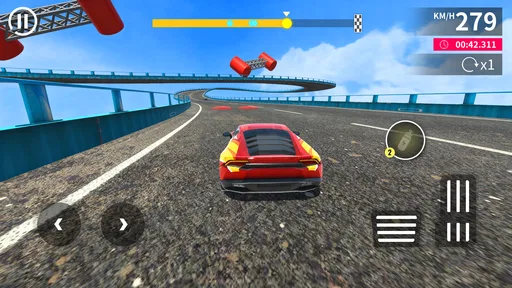
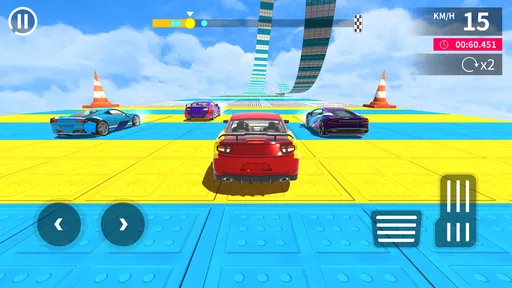
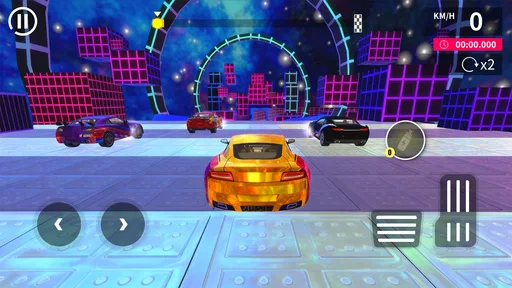
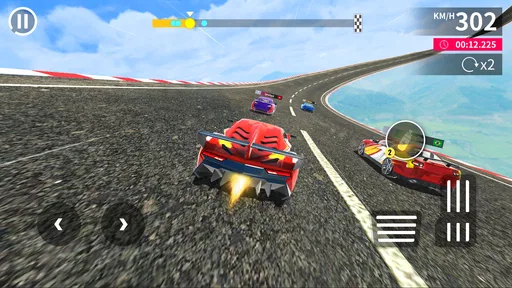
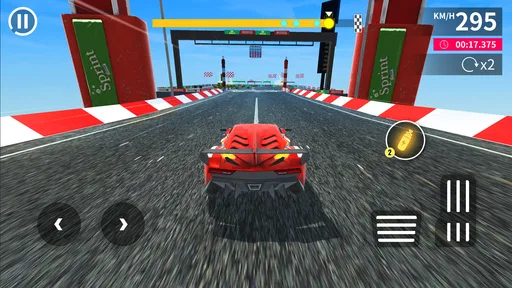
Our Review of extreme car race master games
 Analysis by Appyee
I picked up Extreme Car Race Master Games expecting a quick racing game for short breaks, and that is exactly where it makes the most sense. It is a free racing game from XGAME STUDIO, built around the simple appeal of getting behind the wheel, choosing a vehicle, and pushing through fast driving challenges without requiring the commitment of a large simulation. I found it easiest to enjoy when I treated each session as a small burst of entertainment rather than as a serious replacement for a console racer.
The game has a 4.3 average from around 50 thousand ratings, and it has passed 10 million installs. Those figures suggest that its straightforward style has found a broad audience, but they do not tell you whether it suits your particular household or playing habits. My experience was more useful for answering that question: it works well on a shared phone or tablet when several people want something immediately understandable, while players looking for deep vehicle tuning, a detailed career structure, or a highly realistic driving model may quickly want something more specialized.
How it fits into a shared household
The most convincing use case is a short, informal session on a device that more than one person uses. Imagine waiting for dinner, sitting in a living room, or handing a phone to someone who wants to try a racing game without a long explanation. The basic premise is clear enough that a new player can begin experimenting almost immediately. I did not need to approach it like a technical driving lesson, and that makes it friendlier than many racing games that bury their main attraction under menus and setup screens.
That simplicity is especially useful when the device changes hands. One person can play for a few minutes, stop, and let someone else take over without needing a lengthy tutorial recap. A younger player can focus on the excitement of movement and obstacles, while an older player can pay more attention to timing and route choices. I would still supervise younger children around any game with optional purchases, but the content rating is Everyone, which makes the overall age context more comfortable than a game built around mature themes.
For a household, I would describe the game as a casual shared activity rather than a family management tool. It gives people a common game to discuss, but I would not assume that it provides separate household profiles, detailed parental controls, or automatic separation of progress. If several people use one device, I would agree on whose turn it is and avoid changing settings or spending anything without asking. That small bit of coordination matters more here than trying to create a complicated system the game may not support.
What the first session feels like
My first impression was that the game prioritizes immediate motion over realism. The driving feels designed to be approachable, with the emphasis on reacting to the course and enjoying the sense of speed. That is a good fit for someone who wants car games rather than a demanding simulator. I could imagine playing it while taking a short break, then putting it down without feeling that I had abandoned a long strategic task.
The trade-off is that casual accessibility can reduce the sense of depth. If you usually play racing games with carefully modeled handling, extensive vehicle statistics, or a large competitive community, this may feel comparatively light. I would choose it for quick entertainment, not for learning real driving technique or recreating the detailed feel of a track day. Its identity is closer to an accessible extreme car race than to a strict simulation.
That distinction also affects how I would introduce it to another person. I would not promise a realistic driving experience. I would say, “Try this if you want fast car action that is easy to pick up.” That description sets the right expectation and prevents the most common disappointment: expecting a full racing simulator from a game that is primarily about quick, energetic play.
Keeping accounts and progress uncomplicated
On a shared device, the first practical question is not only whether the game is fun but also whether everyone can understand what belongs to whom. Because I prefer not to mix personal progress when several people use one phone, I would decide on a simple household rule before playing. One person can use the game at a time, or the device owner can keep the main progress while others play only when they are comfortable with that arrangement.
I would also avoid treating a guest session as a harmless place to test every purchase or change. The game is free to download and play, but it includes in-app purchases ranging from $2.99 to $49.99 per item. That range is important in a shared setting. A child or guest may see an appealing option without understanding that it costs real money, so I would keep purchasing decisions with the device owner and require permission before confirming anything.
This is one of the less obvious strengths of a simple racing game: it is easy to establish a turn-taking routine. You do not need to coordinate a complicated team or explain a large set of roles. A household can decide who is playing, how long a turn lasts, and whether progress should be left untouched. The weakness is that the game itself should not be treated as the place where those boundaries are managed. The people using the device still need to communicate clearly.
Making short sessions work better
I found that the game benefits from a “one goal per session” approach. Instead of opening it with the vague intention of playing until boredom arrives, I would choose a small target: complete a few races, practice handling a vehicle, or let a new player learn the controls. This keeps the experience from becoming repetitive too quickly and makes it easier to hand the device to someone else.
For younger or less experienced players, I would let them experiment before offering advice. In a casual racer, the first few mistakes are part of the fun, and constant instructions can make the game feel like homework. Once they understand how the vehicle responds, a useful tip is to focus on smooth control rather than frantic corrections. That approach is not a hidden feature, but it changes the feel of play and makes the game more approachable for someone who normally struggles with racing controls.
For a group taking turns, I would also keep a verbal record of progress instead of assuming everyone remembers which vehicle or challenge was being used. A quick note such as “next turn starts here” prevents arguments and avoids unnecessary replaying. This is a small household workflow, but it is more practical than expecting a casual game to organize shared-device ownership for you.
Age, trust, and everyday suitability
The Everyone rating makes the game easier to consider for a mixed-age household. The racing theme is familiar, and I did not approach it as a game that requires mature judgment or adult-only subject matter. Still, an age rating does not answer every household question. It does not decide whether a child understands optional purchases, whether screen time fits your routine, or whether a shared device should be available without supervision.
I would be comfortable introducing it to a child who already understands that free games can contain paid extras, but I would explain that clearly before handing over the device. With younger children, I would keep the device owner nearby during the first sessions and make sure they know not to confirm a purchase. This is not because the racing concept is difficult; it is because the commercial boundary is easier to overlook when a game feels like a harmless quick activity.
Trust also matters between adults and older children. If everyone uses the same phone, a clear agreement about purchases and progress avoids most friction. I would not let someone else explore payment options casually, even if they have no intention of buying. A shared device is a shared responsibility, and the game’s purchase range makes that rule worth stating rather than assuming.
The game is less suitable for a household that wants strong separation between players. If each person needs a private career, carefully protected progress, or a clearly independent account experience, I would look for a racing game built around those needs instead. I would also skip this one for a player who wants realistic car behavior above all else. The accessible style is an advantage for casual use, but it is also the reason a serious racing fan may find it shallow.
How it compares with familiar racing alternatives
Compared with a realistic racing simulator, this game asks for less patience and less technical knowledge. You can approach it for a quick drive without first learning a complex setup. That makes it better for a shared household where players have different skill levels. A simulator is usually the stronger choice for someone who enjoys fine control, authentic track behavior, and long-term mastery, but it can be a poor fit when a child or casual player simply wants to start racing.
Compared with a large, story-driven racing game, this one is easier to fit into small gaps in the day. You are less likely to need a long uninterrupted session to feel that you have made meaningful progress. The downside is that it may not offer the same sense of world-building, customization, or personal identity that keeps people attached to a bigger game. I would choose this for immediacy, while choosing a more expansive alternative for a dedicated primary racing hobby.
It also differs from competitive multiplayer racers in the way it works socially. A shared-device session can be friendly because players can take turns and comment on each attempt, but that is not the same as a structured online competition. If your main motivation is ranking against other players or coordinating a team, you should choose a game designed around that purpose. If your priority is letting several people enjoy car action without a complicated commitment, this game has the clearer advantage.
Performance expectations and practical setup
The game’s current version is 2.0.4, and it supports devices running Android 7.0 or later. Before installing it on an older household phone, I would check the operating system rather than assume that every device can run it. That is particularly useful when a family keeps an older phone as a shared entertainment device. Compatibility is a small detail, but discovering it after planning a group session is frustrating.
I would also install and open the game before giving it to a child or guest. That first launch lets the device owner understand the opening flow, check how purchases are presented, and decide whether the controls feel comfortable on that particular screen. Even when a game is rated for Everyone, the owner should know what the experience looks like before making it part of a shared routine.
For a phone with limited storage or an older battery, I would test a short session rather than planning a long one immediately. Racing games naturally keep the screen active and demand frequent input, so comfort matters. If the device becomes awkward to hold or the display feels cramped, a larger tablet may be more pleasant for shared use. I would not buy a new device solely for this game; its casual nature makes it better suited to hardware you already own.
Where the free model changes the decision
Being free makes the initial decision easy. A household can try the game without paying upfront, which is helpful when several people have different tastes. One person may enjoy the fast driving while another loses interest after a few races. That low entry barrier is one reason I see it working well as a communal “try it and see” game.
The in-app purchase range changes the conversation after installation. I would treat paid items as optional extras rather than part of the basic promise, and I would never let a child decide alone whether an item is worth its price. The higher end of the range is substantial enough that a mistaken tap would be more than a minor inconvenience. My practical advice is to decide your household’s purchase rule before anyone starts playing, not after a surprise charge appears.
There is also a psychological trade-off. A free game can be easier to share, but optional purchases may tempt players to think about spending when they should simply be enjoying a short session. If you dislike that kind of pressure, a paid racing game with a clearer one-time cost may be a better fit, even if it offers less immediate accessibility. I would keep playing this one when the free entry and quick action matter more than having a completely purchase-free environment.
Who should install it, and who should pass
I would recommend it to someone who wants an approachable car racing game for brief sessions, especially when the device is shared with relatives or friends. It is a sensible pick for mixed skill levels because the central idea is easy to understand, and it does not demand that every player become a racing enthusiast. It also suits people who enjoy the excitement of extreme driving without needing a realistic simulation.
I would be more cautious with a player who expects a long, carefully structured career. If your enjoyment comes from tuning every part of a car, comparing detailed handling models, or competing in a persistent online league, I would direct you toward a more specialized racing title. This game is not a bad choice because it lacks those priorities; it is simply aimed at a different kind of session.
I would also pass if you are looking for a completely private, account-separated experience on a household device. The game can be part of a shared routine, but the boundaries come from the people using the phone or tablet. If progress ownership and purchase controls are central to your decision, choose an alternative with those systems clearly built into its design.
My household verdict
After using it as a casual racer, I see Extreme Car Race Master Games as a good shared-device option when the household agrees on simple rules. Its strongest quality is immediacy: someone can pick it up, understand the appeal, and enjoy a short burst of driving without turning the session into a major project. The Everyone rating and free entry make it easier to consider for a broad age range, while the racing focus gives different players a common activity.
Its limitations are equally important. It is not the choice I would make for realistic driving, elaborate long-term progression, or carefully separated personal accounts. The optional purchase range also means that adults should set expectations before children or guests play. Those are not reasons to reject it outright, but they do determine whether it belongs on your shared phone.
My final recommendation is simple: install it if your household wants accessible car action, short turns, and an easy game to pass around. Open it first, agree on progress and spending boundaries, and judge it by the fun of a quick race rather than by the standards of a full simulator. For that specific role, it earns its place; for a serious racing setup, I would choose something deeper and more controlled.
Verdict
Strengths of extreme car race master games
- Fast-paced races are easy to start, even for casual players.
- Wide selection of cars gives each race a different feel.
- Short events work well for quick gaming sessions.
- Simple controls make steering comfortable on mobile screens.
- Unlockable upgrades provide a clear sense of progression.
Limitations of extreme car race master games
- Frequent ads may interrupt races or appear between events.
- Some upgrades can take considerable time without in-app purchases.
- Handling may feel overly sensitive on certain devices.
- Limited track variety can make repeated races feel familiar.
- Battery usage may increase during longer high-speed sessions.
Other Releases by XGAME STUDIO
View All


Similar Picks in This Category
View All
Hill Climb Racing
Fingersoft4.3

Dr. Driving
SUD Inc.4.2

Traffic Rider
skgames4.5

Asphalt 8 - Car Racing Game
Gameloft SE4.6

Race Master 3D: Car Racing
Beresnev Games4.6

Extreme Car Driving Simulator
AxesInMotion Racing4.3
Frequently Asked Questions
What is Extreme Car Race Master, and what kind of gameplay does it offer?
Extreme Car Race Master is an arcade-style racing game focused on fast cars, challenging tracks, jumps, obstacles, and competitive time-based events. After testing its main modes, the game feels designed for short, energetic sessions rather than a highly realistic driving simulation. Players can race through different environments, avoid hazards, collect rewards, and improve their performance by learning each track’s turns, ramps, and difficult sections.
Can I play Extreme Car Race Master offline?
The game may allow some racing content to be played without a constant internet connection, which is useful when traveling or when mobile data is unavailable. However, certain features may require online access, including advertisements, updates, cloud-related functions, leaderboards, or other connected content. It is best to launch the game once while connected to the internet and check which modes remain available after switching to offline play.
Is Extreme Car Race Master free to download and play?
Extreme Car Race Master is generally presented as a free-to-download racing game, but free access may include advertising, optional purchases, or progression systems that encourage players to spend money. You can start racing without paying, although some upgrades, vehicles, bonuses, or faster progression may be connected to in-app purchases. Parents should also review the device’s purchase settings before allowing children to play.
Does the game include car customization and upgrades?
Customization and vehicle improvement are important parts of the experience, although the exact options can depend on the version installed and the progression reached. Players can typically unlock or select different cars and improve performance-related qualities such as speed, acceleration, handling, or braking. Upgrading the right attribute is useful because a fast vehicle is not always the easiest one to control on obstacle-filled tracks.
Is Extreme Car Race Master suitable for children and low-end devices?
The game is easy to understand because its controls and objectives are built around straightforward racing actions, making it accessible to younger players. Nevertheless, advertising, in-app purchases, and fast-paced gameplay should be checked by parents. Performance can vary between devices: newer phones usually provide smoother graphics, while older or low-end models may experience longer loading times, reduced visual quality, or occasional frame-rate drops.
Play our best games!


